
FORMAT: DOWNLOAD
This product is not supplied in physical format. You will receive an email from our store with the download link and product activation code.
 Security policy
(edit with the Customer Reassurance module)
 Delivery policy
(edit with the Customer Reassurance module)
 Return policy
(edit with the Customer Reassurance module)
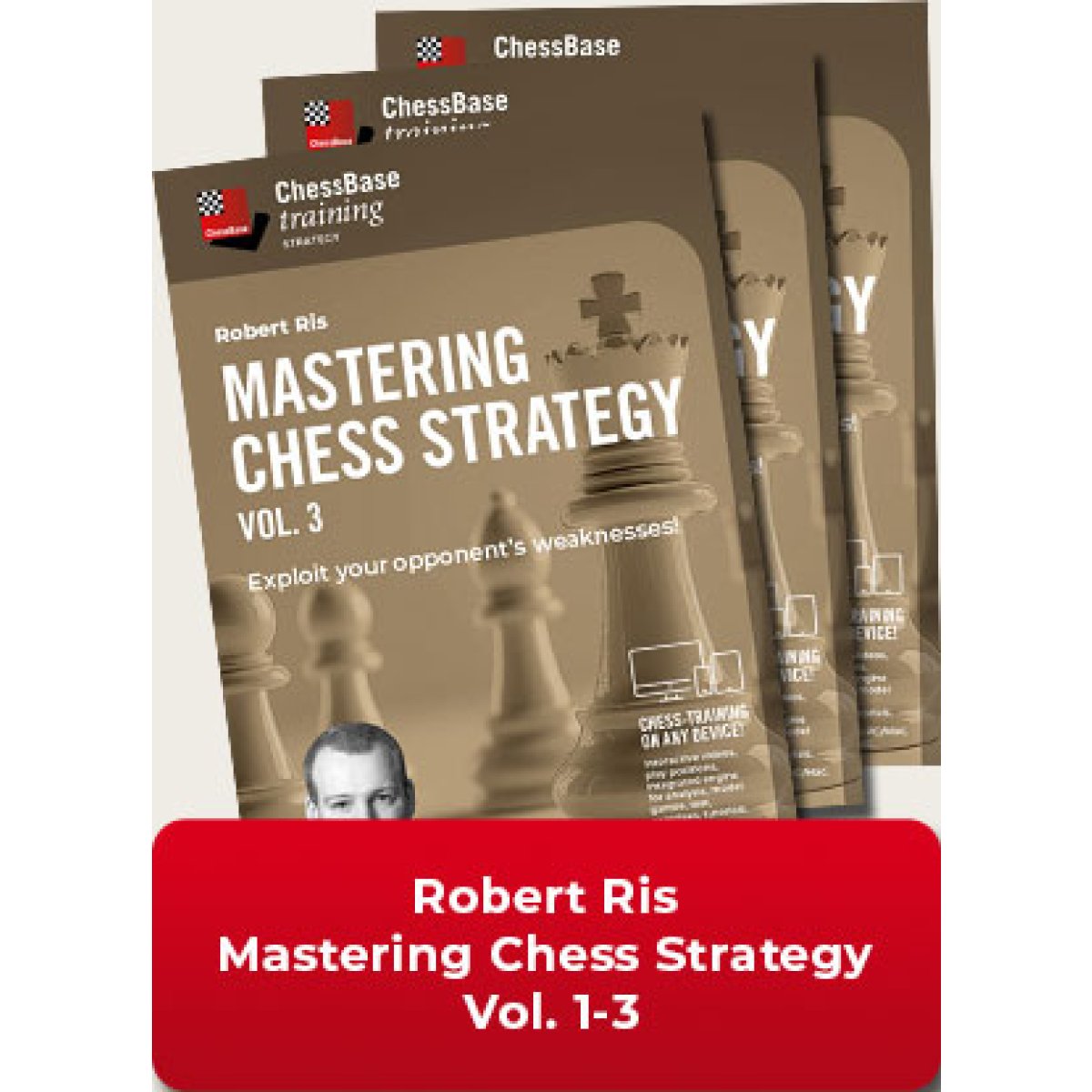
In this video course, you will take your first steps toward mastering strategic concepts. As the legendary player Philidor (1726-1795) said: "pawns are the soul of chess," and in this basic strategy course, you will see that this statement still holds true.
After a brief introduction to each piece, analyzing their strengths and weaknesses, we will focus on pawns and their specific functions (protecting the king, supporting pieces, and limiting the opponent's mobility) and how they influence the development of the game. Some pawns are strong, others weak; you will learn when a pawn is weak and how to take advantage of it. Where there are weak pawns, there are also weak squares: what are they and how do your pieces benefit from occupying them? The rook is a powerful piece, and in the topics "open files" and "seventh rank," you will see how solid positional play is closely linked to attacking chess. All these factors are key to planning the improvement of your pieces or weakening the opponent’s position. The interactive format allows you to test your knowledge with 77 practical exercises.
After laying the foundations in Volume 1, deepen your understanding of key strategic concepts to improve your middlegame play. Don't expect lengthy theoretical explanations; this course is based on active learning.
Prepare to analyze, evaluate, and make real decisions as in a practical game. The central question of this course is: Which pieces are good, which are not, and what can you do about it? Mastering this principle will allow you to solve complex positions with clarity and confidence.
What you will learn – a structured approach to piece play:
• Improve your weakest piece: identify and activate the pieces that work less to maximize their potential.
• Piece exchanges: when to trade and when to keep key pieces for greater impact.
• King safety: understand how piece activity affects the protection of your king.
• Out-of-play pieces: detect poorly placed pieces and how to bring them back into action.
The course includes interactive challenges that test your strategic thinking, with multiple questions to reinforce concepts.
Extensive training content and interactive exercises in ChessBase Books:
Solve exercises and test your knowledge with the Fritz application.
Building on what you learned in previous volumes, this course focuses on an essential skill: identifying and attacking your opponent's weaknesses. Whether it's a weak pawn, a vulnerable king, or poor piece coordination, you will learn to spot critical targets, prioritize attacks, and execute clear and effective plans. Besides strategy, you will develop strong tactical skills.
Throughout the course, you will do exercises that combine strategic planning with dynamic calculation, reflecting real game situations.
What you will learn – a practical method to attack weaknesses:
• Find the weak spot: how to systematically identify your opponent's greatest vulnerabilities.
• Prioritize targets: not all weaknesses are equally important; learn to choose the most effective plan.
• Balance strategy and tactics: understand how planning and concrete calculation complement each other.
• Stay flexible: dynamic positions require adaptability; train to adjust plans as the game evolves.
The numerous interactive exercises reinforce learning with multiple questions in each case.
Extensive training content and interactive exercises in ChessBase Books:
Solve exercises and test what you have learned with the Fritz application.


FORMAT: DOWNLOAD
This product is not supplied in physical format. You will receive an email from our store with the download link and product activation code.