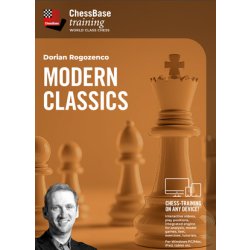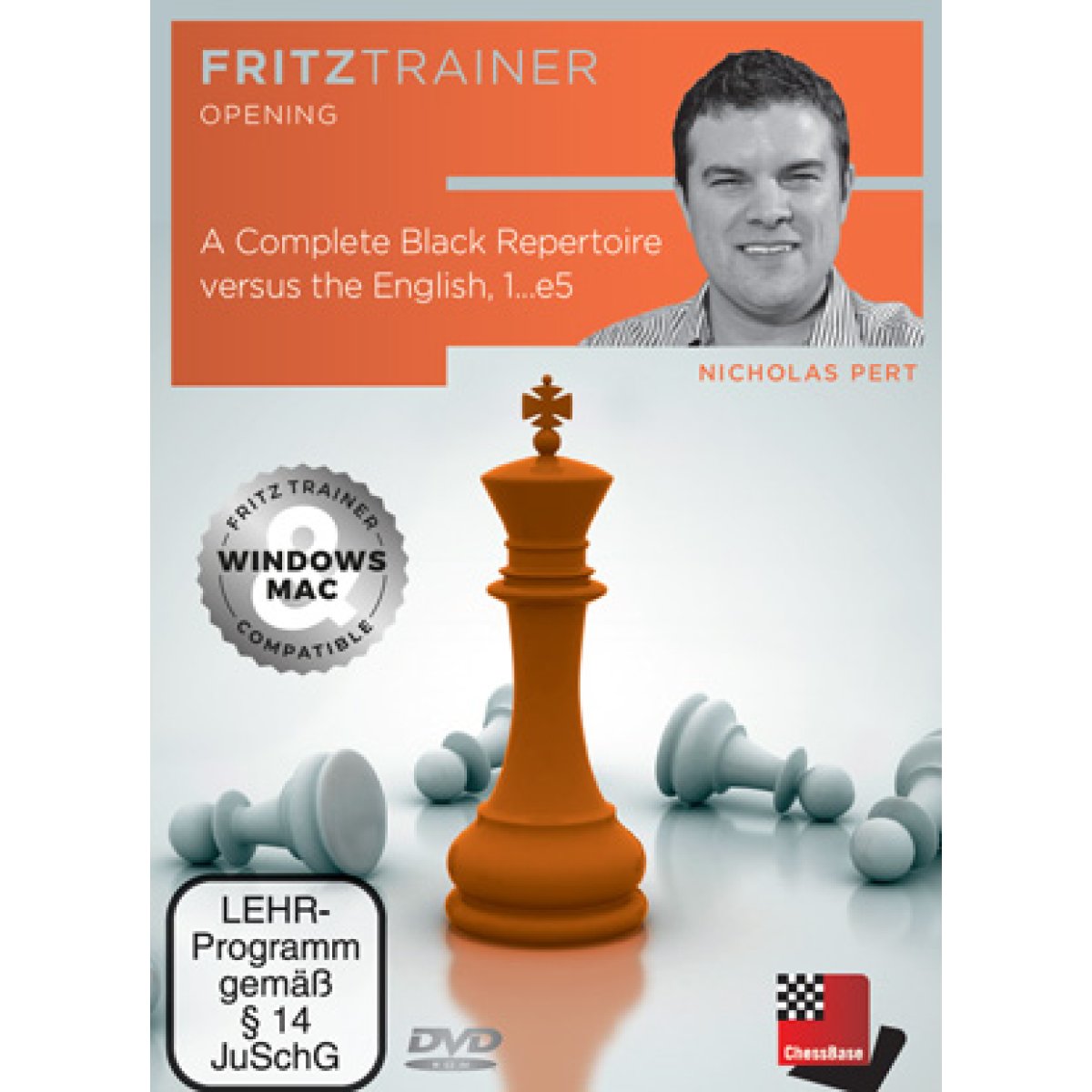


Learn a complete repertoire with Black against the English Opening 1.c4, using the solid response 1...e5. This video course, nearly 5 hours long, includes interactive exercises and model games, covering variations such as the Four Knights system and lines with g3. Perfect for players who want to equalize and capitalize on opponents' mistakes with advanced analysis and training.
FORMAT: DOWNLOAD
This product is not supplied in physical format. You will receive an email from our store with the download link and product activation code.
 Security policy
(edit with the Customer Reassurance module)
 Delivery policy
(edit with the Customer Reassurance module)
 Return policy
(edit with the Customer Reassurance module)
The English Opening has been gaining ground among White players who seek to avoid the extensive theory of 1.e4 or 1.d4, aiming to achieve a slight advantage in solid positions. Many enthusiasts focus on preparing against 1.e4 and 1.d4 but often neglect studying responses to the English. The move 1...e5 is a solid option that offers good chances to equalize or even gain an advantage in various lines. In this video series, I present a complete repertoire for Black based on this move. After years of experience using 1...e5 against the English, this choice is common among leading grandmasters such as Anish Giri, whose opening preparation work is reflected in the chapters.
This repertoire is designed for players seeking a comprehensive and autonomous response to 1.c4. The move 1...e5 is the second most common reply to the English Opening, after 1...Nf6, and it avoids direct transpositions into openings based on 1.d4. In several chapters, Black manages to equalize, and when White tries risky moves or is unfamiliar with the positions, Black can aim for an advantage. The two most typical structures are the Four Knights English (1.c4 e5 2.Nc3 Nf6 3.Nf3 Nc6) and systems with an early g3 (1.c4 e5 2.g3 c6). Both positions are analyzed in depth, including main and side lines. Recurring themes facilitate understanding of the ideas and theory of this opening.
• Video duration: 4 hours 50 minutes (in English)
• Interactive training with video feedback
• Bonus: training with ChessBase applications to memorize the repertoire and practice key positions against Fritz at various levels
• Database with model games
In 1843, during a match considered unofficially as a world championship, the English master Howard Staunton (1810–1874) played 1.c4 against the French Pierre Saint-Amant (1800–1872). Since then, this move has been known as the English Opening. However, it did not gain full acceptance until the 1920s and was successfully employed by modern world champions such as Botvinnik, Petrosian, Karpov, and Kasparov.
Learn a complete repertoire with Black against the English Opening 1.c4, using the solid response 1...e5. This video course, nearly 5 hours long, includes interactive exercises and model games, covering variations such as the Four Knights system and lines with g3. Perfect for players who want to equalize and capitalize on opponents' mistakes with advanced analysis and training.
FORMAT: DOWNLOAD
This product is not supplied in physical format. You will receive an email from our store with the download link and product activation code.