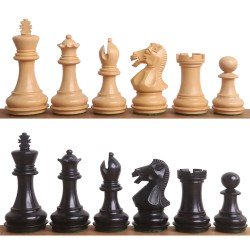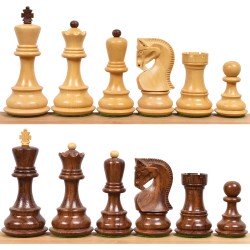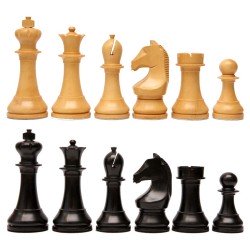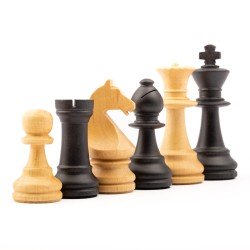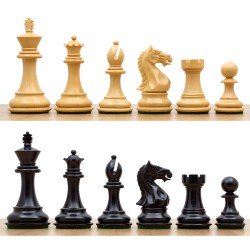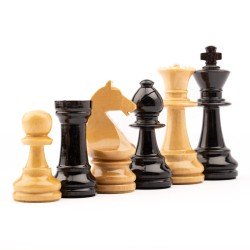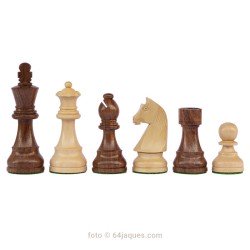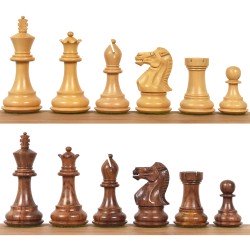

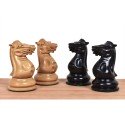
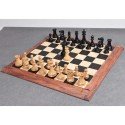
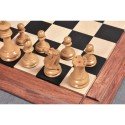
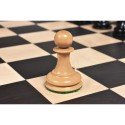
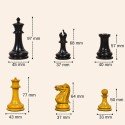
This set of pieces is a reproduction of the historic Jaques Cook pieces from 1849, designed by the famous turner John Jaques and registered by his partner Nathaniel Cook on March 1, 1849.
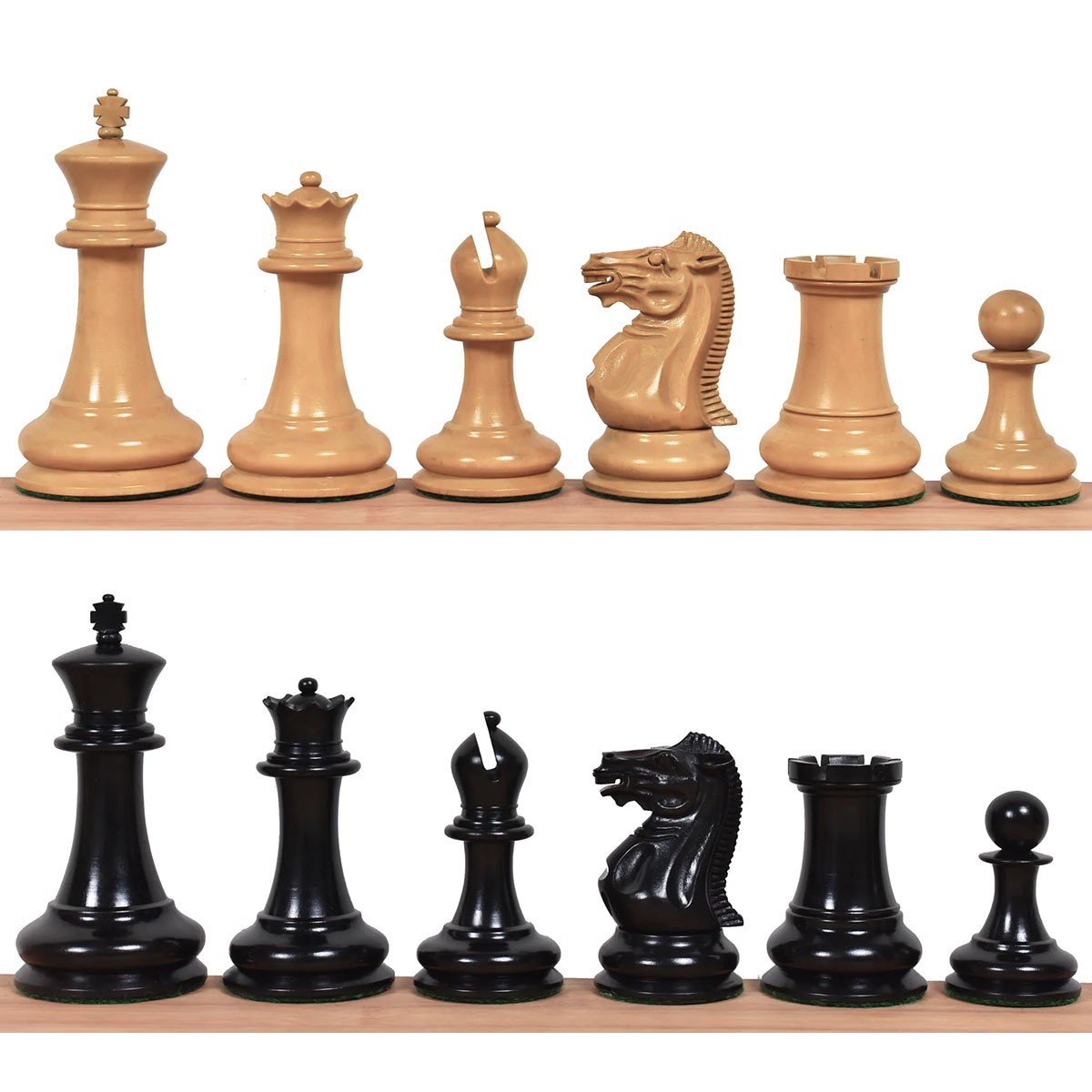
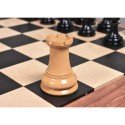
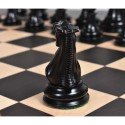
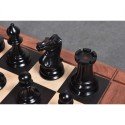
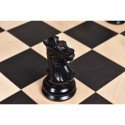
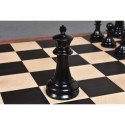
The sturdy rooks are designed to resemble solid castles with impregnable walls, the pawns have a minimalist look with slender collars, the bishops feature simple miters, the tall and elegant king is easily distinguished by his cross, and the queen has a distinctive crown. The knight, a standout piece of the set, is inspired by the horses from the Elgin Marbles of the Athenian Parthenon.
The timeless beauty of these chess pieces has made them the choice of the most discerning players and a highly prized design among collectors.
The Birth of a Standard
The Jaques Cook Staunton pieces from 1849 are not just tools for a game; they are the "Holy Grail" of modern chess. Before their appearance, the board was a chaos of fragile, unbalanced, and hard-to-distinguish pieces.
Before 1849, if you traveled to another country, you might encounter Selenus style pieces (tall and ornate) or Regency style (slim and easy to topple). This was a problem for competition.
The Designer: Nathaniel Cook.
The Manufacturer: John Jaques of London.
The Patron: Howard Staunton, the best player of the era, who lent his signature and prestige to promote them.
Characteristics of the Original Cook
The pieces produced between 1849 and 1850 (the initial Cook period) are the most valuable to collectors due to specific details lost in later versions:
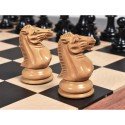
The Knight: Inspired by the Elgin marbles of the Parthenon. The 1849 sets have exquisite hand carving, with realistic ears and a distinctive expression.
The Proportion: Based on neoclassical architecture, with wide, heavy bases (often internally weighted with lead) for superior stability.
The Material: Originally boxwood for the white pieces and ebony for the black. Luxury versions were also made in ivory.
The Mark of Authenticity: The rook on the right and the king's knight often bear a small stamped crown, a practical detail for recording games.
Why Are They So Valuable Today?
An original 1849 Jaques set can fetch astronomical prices at auctions (thousands of euros), mainly because of:
The Signature: The first sets included a label signed by hand by Howard Staunton.
The Patina: The color that old boxwood acquires is a deep amber impossible to replicate artificially exactly.
The Legacy: This design was so perfect that FIDE (International Chess Federation) declared it the only official standard for tournaments.
A Curious Detail
Although they are called "Staunton," the great Howard Staunton did not design them; he was simply an excellent 19th-century "influencer." His massive support in his chess column in the Illustrated London News made Cook’s design wipe out all competitors in less than a decade.
This set of pieces is a reproduction of the historic Jaques Cook pieces from 1849, designed by the famous turner John Jaques and registered by his partner Nathaniel Cook on March 1, 1849.
The sturdy rooks are designed to resemble solid castles with impregnable walls, the pawns have a minimalist look with slender collars, the bishops feature simple miters, the tall and elegant king is easily distinguished by his cross, and the queen has a distinctive crown. The knight, a standout piece of the set, is inspired by the horses from the Elgin Marbles of the Athenian Parthenon.
The timeless beauty of these chess pieces has made them the choice of the most discerning players and a highly prized design among collectors.