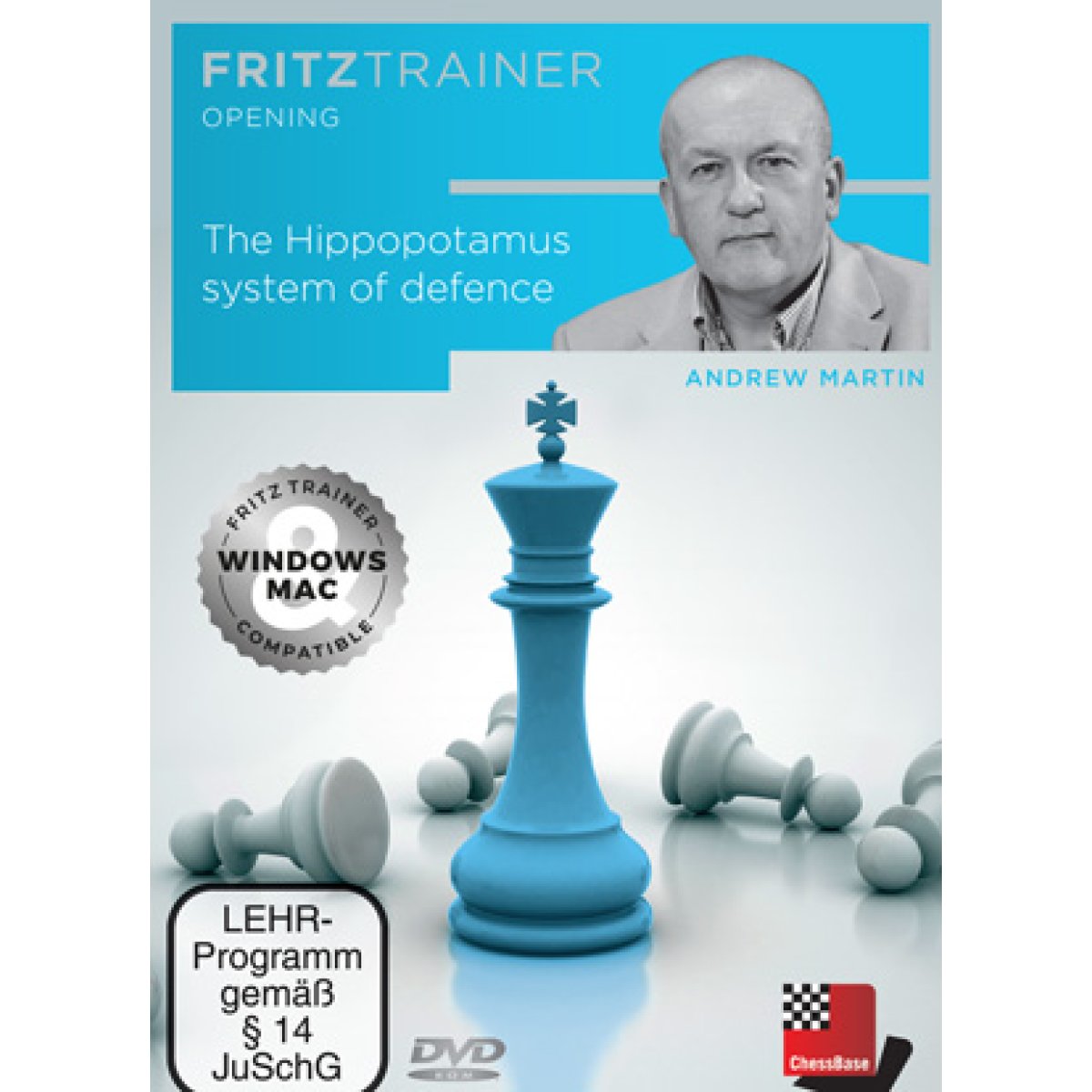

The Hippopotamus system of defence
search
  • The Hippopotamus system of defence

The Hippopotamus system of defense

€29.90
Tax included
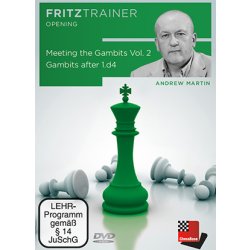
Discover the Hippopotamus Defense system, a solid and flexible opening for Black that allows you to build a stable position and counterattack at the right moment. This anti-theoretical approach, adopted by grandmasters such as Boris Spassky and Gata Kamsky, avoids memorizing long variations and relies on experience. Learn with IM Andrew Martin in an interactive 5-hour course featuring exercises and analysis to master this unique strategy.

FORMAT: DOWNLOAD
This product is not supplied in physical format. You will receive an email from our store with the download link and product activation code.

Quantity
In Stock

  Security policy

(edit with the Customer Reassurance module)

  Delivery policy

(edit with the Customer Reassurance module)

  Return policy

(edit with the Customer Reassurance module)

What is the Hippopotamus Defense system? The idea is that, at the start of the game, Black develops within their first three ranks. They build a solid, flexible, and stable position, waiting for the right moment. At the opportune time, they will counterattack! The name Hippopotamus was coined by an eccentric English chess enthusiast, JC Thompson, in the 1950s. It seems as fitting a name as any. Under the right conditions, Black emerges from the swamp of the board to crush their opponent.

Many strong players have shown interest in the Hippo, including grandmasters such as Boris Spassky and Gata Kamsky. Here we find an anti-theoretical opening that allows one to rely on experience without the need to memorize long sequences of moves. It is worth noting that White can also adopt a Hippo style. In this ChessBase video course, IM and senior FIDE trainer Andrew Martin presents a game plan for Hippo users and explains how this opening is used today. It is an exciting journey through a rather uncommon form of chess.

• Video length: 5 hours (English)
• Interactive training with video feedback
• Extra: training with ChessBase applications – play key positions against Fritz at various levels

More... Less...
Included content:
  • Fritztrainer application for Windows and Mac
  • Available for download or on DVD
  • Video course with an approximate duration of 4 to 8 hours
  • Repertoire database: save and incorporate Fritztrainer games into your repertoire (in WebApp Opening or ChessBase)
  • Interactive exercises with video feedback: the authors present exercises and key positions where you must enter the solution, with corrections and additional explanations
  • Example games in ChessBase database format
  • New: many Fritztrainers also available for streaming on the ChessBase video portal
Features of the FritzTrainer application:
  • Videos can be played in the Fritztrainer app or in the ChessBase program with board, notation, and function bar
  • Analysis engine activatable at any time
  • Pause video for manual navigation and analysis in the game notation
  • Insertion of personal variations, engine analysis, and saving within the game
  • Variant learning: view specific lines in ChessBase WebApp Opening with automatic playback, memorize and practice the transformation (starting position – final position)
  • Active opening training: selected positions are transferred to ChessBase WebApp Fritz-online, where you can face Fritz to test and play the new opening
More possibilities: start FritzTrainer from the ChessBase program
  • Direct access to the database with all games and analyses
  • Easy incorporation of games into the opening repertoire
  • Direct evaluation with reference to games; playback on the analysis board
  • Saving personal variations and adding to your own repertoire
  • Playback training
  • Active LiveBook
  • Use of all engines installed in ChessBase for analysis
  • Assisted analysis
  • Printing of notation and diagrams (for study material)

Sample video

Content

  • Introduction and general ideas
  • Introduction
  • Game plan
  • Spoelman vs Hort
  • Jansa vs Jokic
  • Plaskett vs Martin
  • Petrosian vs Spassky
  • Nezhmetdinov vs Ujtelky
  • Nasuta vs Krasenkow
  • Klekowski vs Kamsky
  • Hippo against queen's pawn systems
  • e4, d4, c4, and f4
  • 1.d4 g6 2.c4 Bg7 3.Nc3 e6 4.Bf4 Ne7
  • 1.d4 g6 2.e4 Bg7 3.c4 e6 4.Nc3 Ne7 5.Bg5
  • 1.d4 g6 2.e4 Bg7 3.c4 b6 4.Nc3 Bb7 5.Nf3 d6 6.Bd3 e6
  • 1.c4 b6 2.d4 Bb7 3.Nc3 e6 4.a3 g6 5.e4 Bg7
  • Hippo against Austrian attack
  • 1.e4 g6 2.d4 Bg7 3.Nc3 d6 4.f4 e6 5.Nf3 Ne7 6.Be2 Nd7
  • 1.e4 g6 2.d4 Bg7 3.Nc3 d6 4.f4 e6 5.Nf3 Ne7 6.Be3 a6
  • 1.e4 g6 2.d4 Bg7 3.Nc3 d6 4.f4 e6 5.Nf3 Ne7 6.Bd3 a6
  • 1.e4 g6 2.d4 Bg7 3.Nc3 d6 4.Be3 a6 5.f4 b5 6.Bd3 e6
  • Hippo using 1...b6 as move order
  • 1.e4 b6 2.d4 Bb7 3.Bd3 e6 4.Ne2 d6 5.O-O Nd7 6.f4 g6
  • 1.e4 b6 2.d4 Bb7 3.Nc3 e6 4.Nf3 d6 5.Bd3 Nd7 6.O-O g6
  • 1.e4 b6 2.d4 Bb7 3.Bd3 g6 4.Ne2 Bg7 5.h4 h6 6.c3 e6
  • 1.e4 b6 2.d4 Bb7 3.Bd3 e6 4.Nf3 g6 5.c3 Bg7 6.Bg5 Ne7
  • 1.d4 b6 2.e4 Bb7 3.Nc3 e6 4.Bd3 g6 5.Nge2 Bg7 6.O-O Ne7
  • Hippo against an early Bc4
  • 1.e4 g6 2.d4 d6 3.Bc4 Bg7 4.Nf3 e6 5.Bb3 Ne7
  • 1.e4 g6 2.d4 Bg7 3.Nc3 d6 4.Bc4 e6 5.Nge2 Ne7
  • Hippo against Be3 and Bg5
  • 1.e4 g6 2.d4 Bg7 3.Nc3 d6 4.Be3 a6 5.Qd2 Nd7
  • 1.e4 g6 2.Nc3 Bg7 3.d4 d6 4.Be3 a6 5.Qd2 b5
  • 1.e4 g6 2.d4 Bg7 3.Nc3 d6 4.Bg5 a6 5.Qd2 b5
  • 1.e4 d6 2.d4 a6 3.Be3 Nd7 4.Nc3 e6 5.Qd2 b6
  • Hippo against quiet White systems
  • 1.Nf3 g6 2.e4 Bg7 3.d4 d6 4.c3 b6 5.Bd3 Bb7 6.O-O e6
  • 1.d4 d6 2.e4 g6 3.Nc3 Bg7 4.Nf3 a6 5.Be2 e6 6.Bg5 Ne7
  • 1.d4 g6 2.e4 Bg7 3.Nc3 d6 4.Nf3 a6 5.a4 b6 6.Bd3 Bb7
  • Conclusion
  • Exercises
  • Description
  • Exercise 1
  • Exercise 2
  • Exercise 3
  • Exercise 4
  • Exercise 5
  • Exercise 6
  • Exercise 7
  • Exercise 8
  • Exercise 9
More...
Less...

Semi-open games

If after 1.e4 Black does not respond with 1...e5, these are called semi-open openings. Among them, the Sicilian (1...c5) stands out, probably the most popular opening today. The French (1...e6) and Caro-Kann (1...c6) also have followers. Additionally, this group includes modern systems like the Alekhine Defense (1...Nf6), Scandinavian Defense (1...d5), and Pirc Defense (1...d6 or 1...g6).

THSOD-CHBU