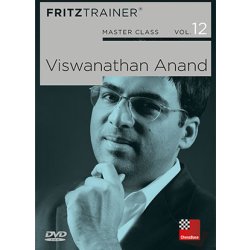


Three stars from India
search
  • Three stars from India

Three stars from India

€94.90
Tax included
Discover "The Keymer Variation - 1.Nf3 d5 2.e3," a versatile and powerful repertoire that avoids conventional theory. This 6-hour video course teaches you how to handle various Black responses, combining strategy and attack. Ideal for club players looking to surprise their opponents and improve their opening play. Additionally, it includes interactive training with the ChessBase app to practice and memorize key positions. Enhance your game today!

FORMAT: DOWNLOAD
This product is not supplied in physical format. You will receive an email from our store with the download link and product activation code.

Quantity
In Stock

  Security policy

(edit with the Customer Reassurance module)

  Delivery policy

(edit with the Customer Reassurance module)

  Return policy

(edit with the Customer Reassurance module)

“The sequence 1.Nf3 d5 2.e3 was not taken very seriously until recently, when online chess gained popularity during the pandemic, and this opening started to be used frequently. I discovered how dangerous this opening can be while trying to find an effective response with Black, and to my surprise, it was not easy. Vincent Keymer employs this opening in many of his games, achieving excellent positions and results. With this opening, White avoids conventional theory and offers multiple options for each move. It combines positional and attacking elements, depending on the system chosen by Black. I believe most club players would not know how to counter it effectively.”

The Keymer Variation - 1.Nf3 d5 2.e3

This video course presents in detail the possible responses Black can choose. You will learn the key concepts and strategies to incorporate this opening into your repertoire. It is an easy-to-learn but very effective weapon that will make your opening play more versatile. Additionally, you will be able to practice with the ChessBase Opening Trainer by replaying moves, guessing how certain positions were reached, or simply reviewing at your own pace to better understand the ideas offered by this opening. Start your journey now!

  • Video duration: 6 hours
  • Training with ChessBase applications
  • Memorize the repertoire and play key positions against Fritz at various levels

Attack Like a Super Grandmaster

Dommaraju Gukesh is currently ranked number 19 in the world with an Elo of 2730 (April 2023) and is only 16 years old. How did he achieve so much at such a young age? Although Gukesh is a well-rounded player, three qualities stand out in his play: attack, calculation, and imagination.

In this Fritztrainer “Attack Like a Super GM with Gukesh” we explore all these aspects, with special emphasis on how to improve your attacking play. Gukesh explains his games in depth and poses questions to help you understand the complexities of each position. Complete games are analyzed, including his victories against elite players such as Rapport, Abdusattorov, Sargissian, and Jones. At the end, you will find test positions to reinforce what you have learned, with games by Gukesh against Magnus Carlsen and Hikaru Nakamura. IM Sagar Shah accompanies Gukesh by asking relevant questions to provide you with valuable insights.

• Video duration: 6 hours 36 minutes

• Interactive training with video feedback

• Extras: Model games and training with ChessBase applications to play attacking positions against Fritz at various levels

Master Advanced Tactics and Calculation Like a Super Grandmaster

Advanced tactics and calculation are fundamental to improving at chess. How do you calculate long variations and when do you stop? When should you trust intuition and what methods should you use? Basic tactics are learned early, but to progress, a deeper approach is necessary. That is why we present “Advanced Tactics and Calculation Like a Super Grandmaster” with GM Vidit Gujrathi.

This course uses studies to demonstrate different aspects of advanced calculation and tactics. Vidit shows us when he applies brute force and detailed calculation, and when he relies on intuition. IM Sagar Shah accompanies Vidit to break down his thinking clearly and accessibly. If you work seriously with this material, you will significantly improve your calculation in games.

Moreover, it includes 95 selected positions for you to practice by playing against Fritz and finding the correct solution. This practical training will prepare you for your real games. Detailed and commented solutions are provided to help you level up.

  • Video duration: 5 hours 26 minutes
  • Extras: Database with 95 positions and training with ChessBase applications to play key positions against Fritz at various levels
More... Less...

This package includes:

What is included:
  • Fritztrainer application for Windows and Mac
  • Available for download or on DVD
  • Video course with approximate duration of 4 to 8 hours
  • Repertoire database: save and integrate games into your repertoire (in WebApp Opening or ChessBase)
  • Interactive exercises with video feedback; the authors present key positions and the user must enter the solution, with explanations and corrections
  • Example games in ChessBase database
  • New: many Fritztrainers available for streaming on the ChessBase video portal
Features of the FritzTrainer application:
  • Video playback with board, notation, and control bar in Fritztrainer or ChessBase
  • Activate analysis engine at any time
  • Pauses for manual navigation and notation analysis
  • Enter and save your own variations and engine analysis
  • Learn variations in ChessBase WebApp Opening with automatic playback and position transformation practice
  • Active opening training: selected positions transfer to ChessBase WebApp Fritz-online to play against Fritz and apply acquired knowledge
Even more possibilities: launch FritzTrainer within the ChessBase program
  • Direct access to the database with all games and analyses
  • Easily incorporate games into your opening reference
  • Direct evaluation with reference to games and playback on the analysis board
  • Save your variations and add them to your personal repertoire
  • Repetition training
  • Active LiveBook
  • Use any engine installed in ChessBase for analysis
  • Assisted analysis
  • Print notation and diagrams for worksheets

Sample Video

Content Index

    The Keymer Variation - 1.Nf3 d5 2.e3

  • Introduction
  • Early deviations
  • 1.Nf3 d5 2.e3
  • Second move deviations
  • Systems with c6
  • 1.Nf3 d5 2.e3 Nf6 3.c4 c6 4.Nc3
  • Early development of Bf5 and Bg4
  • 4...e6
  • 4...Nbd7
  • 4...a6
  • Systems with c5
  • 1.Nf3 d5 2.e3 c5 3.b3
  • Third move deviations
  • Fourth move deviations
  • 3...Nf6
  • Systems with e6
  • 1.Nf3 d5 2.e3 Nf6 3.c4 e6 4.Nc3
  • 4...b6
  • 4...c5 5.cxd5 Nxd5
  • 4...c5 5.cxd5 exd5
  • 4...Be7
  • 4...dxc4
  • Exercises
  • Description
  • Exercise 1
  • Exercise 2
  • Exercise 3
  • Exercise 4
  • Exercise 5
  • Exercise 6
  • Exercise 7
  • Exercise 8
  • Exercise 9
  • Repertoire training
  • Description
  • Second move deviations
  • Systems with c6 - aiming at Semi-Slav 4...e6
  • Systems with c6 - early development of Bf5/Bg4
  • Systems with c6 - aiming at Semi-Slav 4...Nbd7
  • Systems with c6 - aiming at Chebanenko Slav
  • Systems with c5 - 3...Nf6
  • Systems with c5 - third move deviations
  • Systems with c5 - fourth move deviations
  • Systems with e6 - 4...b6 Queen's Indian style
  • Systems with e6 - 4...c5 5...Nxd5
  • Systems with e6 - 4...c5 5...exd5
  • Systems with e6 - 4...Be7
  • Systems with e6 - 4...dxc4
  • Positions for practice
  • Description
  • Systems with c6 1 (Semi-Slav with e6)
  • Systems with c6 2 (early Bg4)
  • Systems with c6 3 (Semi-Slav with Nbd7)
  • Systems with c6 4 (Chebanenko Slav)
  • Systems with c5 1 (3...Nf6)
  • Systems with c5 2 (3...a6)
  • Systems with c5 3 (4...g6)
  • Systems with e6 1 (4...b6)
  • Systems with e6 2 (4...c5 5...Nxd5)
  • Systems with e6 3 (4...c5 5...exd5)
  • Systems with e6 4 (4...Be7)
  • Systems with e6 5 (4...dxc4)
  • Bonus
  • Analysis
  • Model games

    Attack Like a Super Grandmaster

  • Introduction
  • Introduction + Gukesh vs D.K. Sharma
  • Gukesh vs Sargissian
  • Gukesh vs Sargissian, Olympiad 2022 - Use of strongpoints
  • Part I - Understanding the Ragozin
  • Part II - Boiling point
  • Part III - Brutal precision
  • Heimann vs Gukesh
  • Heimann vs Gukesh, Menorca 2022 - h-pawn push
  • Part I - Strategic danger
  • Part II - The monstrous h-pawn
  • Part III - Helplessness
  • Abdusattorov vs Gukesh
  • Abdusattorov vs Gukesh, Biel GM 2022 – Opening the enemy king
  • Part I - Sveshnikov time
  • Part II - Opening the floodgates
  • Part III - Calculation is key
  • Gukesh vs Jones
  • Gukesh vs Gawain Jones, Spanish Team Championship 2022 - Harmony
  • Part I - Rare line in the Grünfeld
  • Part II - This is beautiful
  • Cuenca vs Gukesh
  • Cuenca Jiménez vs Gukesh, Open Formentera 2022 - Prolonged attack
  • Part I - Opening nuances
  • Part II - Lone king
  • Part III - The prolonged attack
  • Miscellaneous
  • Miscellaneous
  • Gukesh vs Aditya Samant - 9-year-old genius!
  • Fischer vs Myagmarsuren - Inspirational game
  • Praneeth Vuppala vs Gukesh - Story of three games
  • Gukesh vs Rapport - Marginalizing opponent’s pieces
  • Exercises
  • Description
  • Introduction + Gukesh vs Magnus Carlsen
  • Exercise 01: Magnus Carlsen vs Gukesh
  • Exercise 02: Gukesh vs Hikaru Nakamura
  • Exercise 03: Gukesh vs Victor Mikhalevski
  • Exercise 04: Nahun Gavarrete vs Gukesh
  • Exercise 05: Radoslaw Gajek vs Gukesh
  • Exercise 06: Gukesh vs Praggnanandhaa
  • Exercise 07: Gukesh vs Daniel Romero Pallares
  • Conclusion - How to continue your journey to master the art of attack
  • Positions for practice
  • Description
  • Gukesh vs Wachinger, 2021
  • Georgiev vs Gukesh, 2021
  • Dukic vs Gukesh, 2022
  • Jeet vs Gukesh, 2019
  • Sorensen vs Gukesh, 2021
  • Gukesh vs Paramzina, 2019
  • Gukesh vs Pratyusha, 2017
  • Krustkalns vs Gukesh, 2019
  • Gukesh vs Wong, 2019
  • Gukesh vs Chowdhury, 2021
  • Bonus
  • Analysis
  • Model games
TSFI-BEVX