
FORMAT: DOWNLOAD
This product is not supplied in physical format. You will receive an email from our store with the download link and product activation code.
 Security policy
(edit with the Customer Reassurance module)
 Delivery policy
(edit with the Customer Reassurance module)
 Return policy
(edit with the Customer Reassurance module)
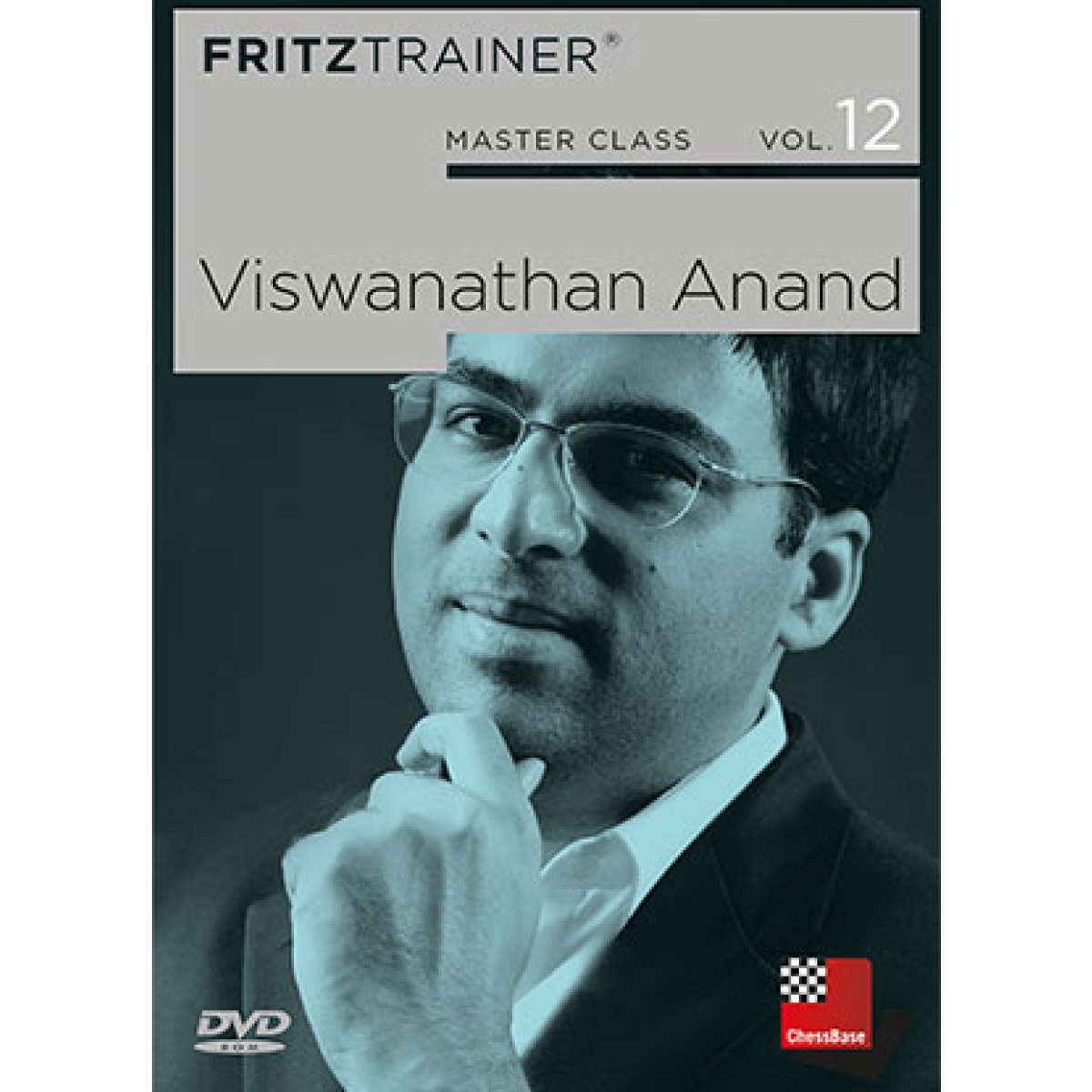
When Viswanathan Anand burst onto the European chess scene, he had already achieved several accomplishments in India, such as winning the Indian Junior Championships and the Indian National Championship while still a junior. At just 14 years old, he was invited to join the Indian national team at the 1984 Chess Olympiad. In 1987, he was crowned World Junior Champion, and in 1988, at 19 years old, he became the first Indian Grandmaster.
After the reunification of the PCA and FIDE in 2006, Anand won the World Championship Tournament in 2007. In 2008, he successfully defended his title in a match against Vladimir Kramnik, becoming the only World Champion to have won or defended the title in three different formats: knockout tournament, round-robin, and match. In 2010 (against Topalov) and 2012 (against Gelfand), he again defended his crown, but in 2013 he lost the final to Magnus Carlsen. Although he won the Candidates Tournament in 2014, he also lost the World Championship rematch that year against Carlsen. Anand remains one of the world’s top players and has driven a genuine boom in chess in India, where he is a national figure. Many young Indians aspire to follow his example and succeed in international chess.
His style is characterized by a deep understanding of the game, combined with quick recognition of tactical patterns and opportunities. As a young player, he surprised his opponents with the speed of his play, often using only ten or fifteen minutes of his thinking time, which explains why he was considered the best rapid and blitz chess player in the world for decades.
This DVD allows you to learn from one of the greatest players in history and, through explanations from the authors (Yannick Pelletier, Mihail Marin, Karsten Müller, and Oliver Reeh), how to organize your games strategically, maintain constant pressure on your opponent, and finish with technical precision in the endgames. Additionally, by studying Anand’s games, you can follow the evolution of many popular openings and better understand the ideas behind them.
FORMAT: DOWNLOAD
This product is not supplied in physical format. You will receive an email from our store with the download link and product activation code.